
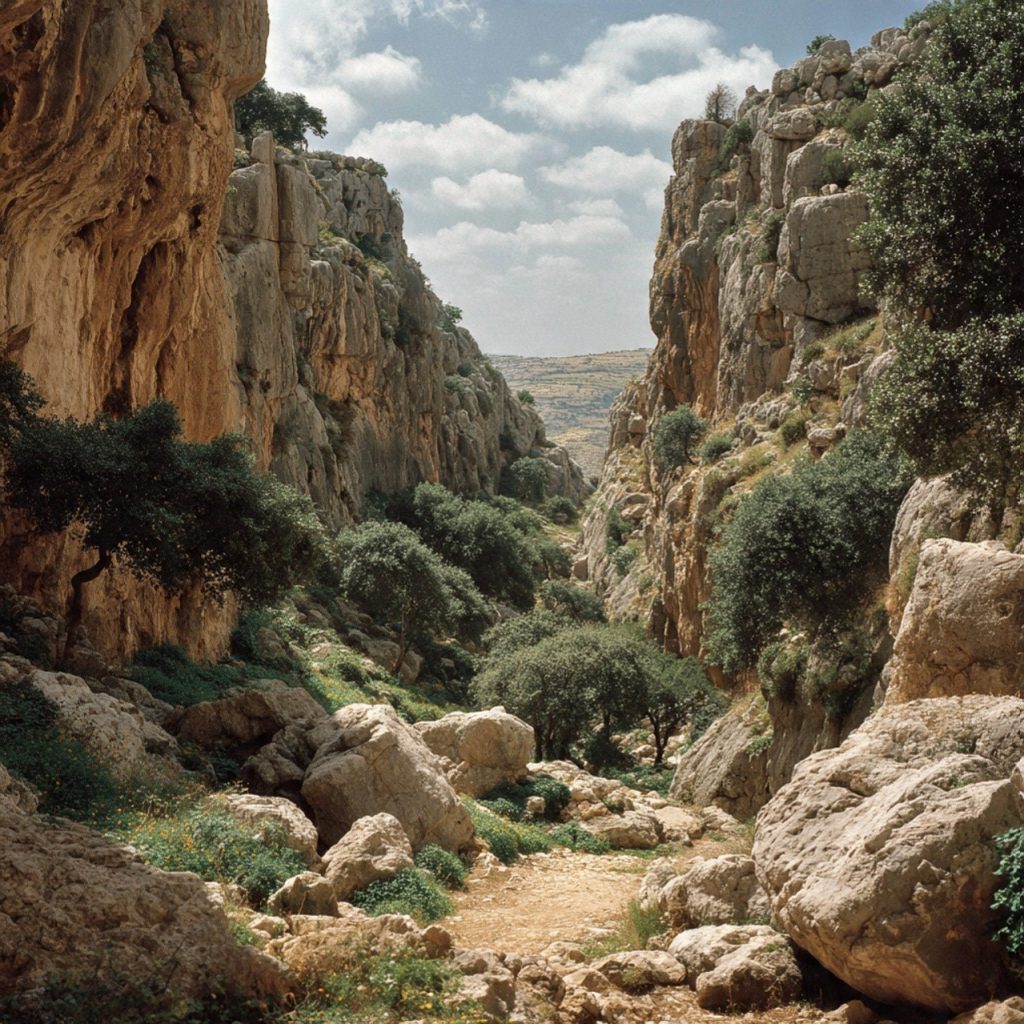
The word “Baca” in Hebrew means “weeping”. So, Valley of Baca means “Valley of Weeping” or “Valley of Balsam Trees.” As the wind blew through the balsam trees, it sounded like crying.
It was a dry, rocky, and hard route which every pilgrim to Jerusalem in ancient Israel had to pass through to get to the holy land.
“Blessed are those whose strength is in you, in whose heart are the highways to Zion. As they pass through the Valley of Baca they make it a place of springs; the early rain also covers it with pools. They go from strength to strength; each one appears before God in Zion” (Psalms 84: 5-6).
David wasn’t describing a detour. He was describing the road. If you are going to Zion — to the presence of God — you will pass through Baca.
For some of us today, Baca is grief. For others, it’s delay, debt, sickness, betrayal, or that season where prayers feel like they hit the ceiling.
It’s the place where the land is dry and your soul feels dry too.
Don’t Make Baca Your Address
Notice that the verse (v.6) says: “As they PASS THROUGH the Valley of Baca….” God never called it home. It’s a passage, and not a prison. It’s only a landmark in your journey to the place of ordination; your place of divine inheritance.
Jesus Himself passed through Gethsemane before the glory of the resurrection. Joseph passed through the pit and prison before the palace. The valley is not to destroy you. It’s to develop you.
Here’s what sets God’s people apart in dry seasons:
They Don’t Stop — “In whose heart are the highways to Zion” (v.5).
Their eyes are still on God. Worship doesn’t stop because circumstances are hard. Strength comes from the Lord, not from the weather in the valley.
They Dig — “They make it a place of springs” (v.6).
The pilgrims didn’t just cry and complain. They dug wells. They prayed. They encouraged one another.
When you’re in Baca, ask God: “Lord, what well do You want me to dig here?” Maybe it’s intercession. Maybe it’s serving someone else who is hurting. Your tears can water ground for the next person.
They Wait for the Rain — “The early rain also covers it with pools” (v.6). The early rain in Israel came right after planting. It softened hard ground.
God’s timing will soften your Baca. What feels like drought today, God will cover with His refreshing tomorrow. “Weeping may endure for a night, but joy comes in the morning” (Psalm 30:5).
David gave us the blueprint when he himself went through his own “Baca”. He says in Psalms 42:5 that the formula to go through the valley of Baca successfully is to wait on the Lord, reflect on the past interventions of God, and then raise your head, lift your hands and praise Him.
From Strength to Strength
The promise is not that you will stay in the valley. The promise is: “They go from strength to strength; each one appears before God in Zion.” (v.7).
God uses Baca to take you higher. The valley teaches dependence. The well you dig becomes testimony. The tears become anointing. You don’t leave Baca the same way you enter it.
The place of your weeping can become the place of someone else’s drinking, if you let Him.
“The Lord will guide you continually and satisfy your desire in scorched places and make your bones strong; and you shall be like a watered garden” (Isaiah 58:11).
- What “Valley of Baca” are you passing through right now?
- What “well” is God asking you to dig in this season — prayer, forgiveness, service, faith?
- Who can you refresh with your testimony once the rain comes?