



As Nigeria continues to navigate economic challenges, including unemployment, poverty, rising living costs and the need for sustainable enterprise development, attention is increasingly turning to the role of institutions outside government in shaping the country’s economic future.
The Church has become central in this discourse, with her influence extending across communities, educational institutions, businesses and social development initiatives.
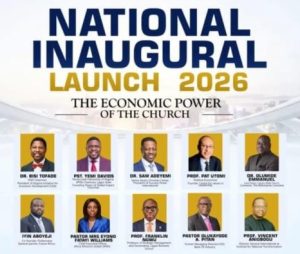
It is against this backdrop that the Faith Economic Empowerment Programme (FEEP), in collaboration with the Pentecostal Fellowship of Nigeria (PFN), Lagos State Chapter, is convening its National Inaugural Launch 2026.
The event, with the theme, “The Economic Power of the Church,” holding on Saturday, November 21, 2026, at the Global Impact Church, Lagos, will bring together Christian leaders, business executives, academics, entrepreneurs and development advocates to examine how the Church can contribute more deliberately to Nigeria’s economic development.
For generations, the Church has played significant roles in moral instruction, education, humanitarian intervention, community development and social mobilisation.
However, the changing economic realities of Nigeria raise an important question: How can the Church translate its considerable institutional reach, human resources and community networks into sustainable economic opportunities?
Entrepreneurship Development
According to the organisers of the dialogue, there is a fresh understanding that Churches can provide platforms for business mentorship, vocational training, entrepreneurial education and access to networks that help individuals transform ideas into viable enterprises.
Through partnerships with business professionals and development organisations, faith-based institutions can also support emerging entrepreneurs and small businesses.
In line with that thinking, the Church is touted to have capacity to contribute to building a skilled and productive population by promoting technical education, digital literacy, professional development and opportunities for young people to acquire relevant skills.
Its influence can also extend to financial literacy, responsible investment, cooperative initiatives and enterprise support, particularly for women, young people and vulnerable households.
Faith & Ethical Leadership
Beyond creating economic opportunities, the Church has a responsibility to promote values that support a productive economy.
Integrity, accountability, discipline, responsible stewardship and respect for human dignity are important principles for building sustainable businesses and institutions, and the Church is the bedrock for building these values.
For the organisers, Nigeria’s economic future requires not only capital and infrastructure but also leadership that recognises the relationship between ethical conduct, public trust and economic prosperity.
The Church can contribute to strengthening these values by serving as a platform for constructive engagement between government, the private sector, civil society and communities on issues affecting economic development.
Therefore, the FEEP National Inaugural Launch is expected to provide a platform for examining these possibilities and the practical steps required to harness the economic potential of faith-based institutions.
Speakers at the event include Dr Bisi Tofade, Pastor Yemi Davids, cleric and leadership coach, Dr Sam Adeyemi, political economist, Professor Pat Utomi, Dr Olumide Emmanuel and entrepreneur Iyin Aboyeji. Others are Pastor Eyono Fatayi-Williams, Professor Franklin Ngwu, Pastor Olukayode Pitan and Professor Vincent Anigbogu.
The FEEP-PFN initiative presents an opportunity to deepen the conversation and explore how faith can translate into practical economic value and contribute meaningfully to the economic future of Nigeria.