


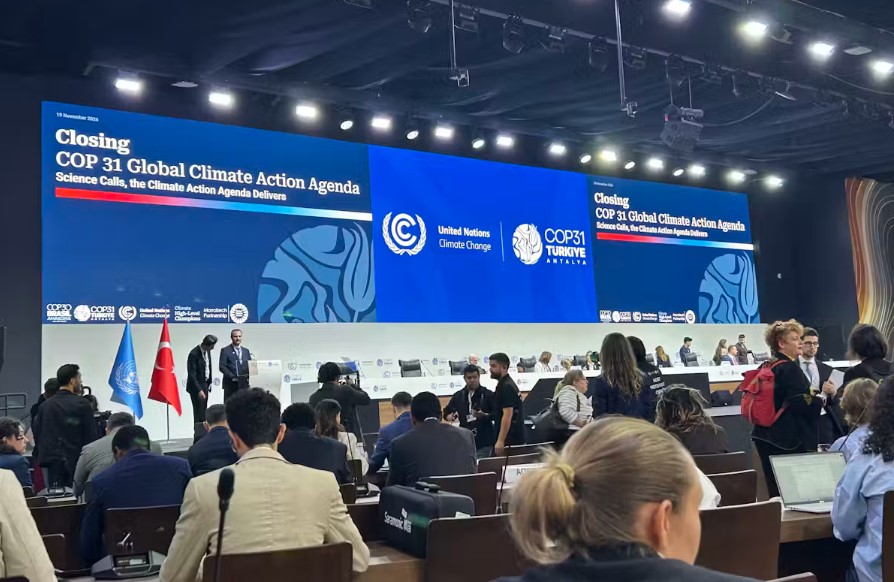
After two weeks of talks and two days of overtime, countries which attended COP31 in Antalya, Türkiye remained divided on issues that are central to resolving the climate crisis. Many of the countries rejected the conclusion as too weak to meet the scale of the crisis.
Basically, COP31 failed to agree on fossil fuels (coal, oil and gas) and climate finance and the final proposal avoided commitment on the two issues.
In effect, the governments share a broad concern about climate change, but they disagree over who should bear the cost of action, how quickly economies should change, and whether fossil fuel production should be named directly. This has made it difficult to turn shared concern into long-lasting commitment.
So, after decades of talks under the Conference of Parties (COP), world leaders have failed to agree on how to curb emissions from coal, oil and gas, which scientists have concluded are the major drivers of global warming.
They have also disagreed on how to finance the impact of climate change and fund energy transition for less developed countries, and wholeheartedly accept responsibility for the damage caused by years of greed and economic exploitation.
That is how short the world has fallen of the standard the Creator required of man to keep the earth. So far, Saudi Arabia, Russia and India, among others, have opposed fossil-fuel phase-out and the inclusion of the text in the final agreements, though over 130 other countries want it included.
COP decisions require consensus. That means one country can block 199 others, and it happened in Antalya. This came to many as hypocrisy: COP31 agreed to keep talking about climate change and money, while refusing to name the cause of the disease that brought it about.
Panama’s environment minister, Juan Carlos Navarro, spoke the minds of many: “It is not acceptable to have a COP or a cover document that does not even mention fossil fuels, and we simply will not put up with it.”
The Deal Breakers
Fossil fuels are not just energy. They are revenue, jobs, and budgets. For Saudi Arabia and other producers – including Nigeria though – a phase-out is an existential threat. For India, it is about energy for 1.4 billion people who still need power. For Europe, energy prices and oil price shock are a big deal.
Everyone that went to COP31 knows the climate is cracking. But no one wants to be the first to pay the economic price for fixing it. The Bible calls it stewardship inverted; humanity was given the earth to keep it, not to consume it for profit and leave the bill to generations to come.
The second great deadlock is finance. Developing countries are said to need $305 billion a year by 2035 just for adaptation. That is for defences against flood, early-warning systems, drought-resilient farming. But what has been committed and received in this regard is a far cry from the proposed numbers.
Africa, small island states and least-developed countries went to Antalya asking for predictable, grant-based money. They left with a roadmap to discuss money later.
The snag is that wealthier countries are under pressure to provide more funding, but this remains politically contentious, not only due to the amount of money involved but also issues about responsibility, trust and whether promises will be met.
This is not just economics. It is justice. The nations responsible for the least emission are the ones paying the penalty first. When the rich refuse to pay for damage they largely caused, it is not a negotiation failure. It is a moral failure.
And then, the United States, the world’s largest historical emitter, was absent from the COP31, the second time after President Donald Trump ended climate cooperation and called global warming a hoax. When the most powerful nation walks away, others ask: Why should we sacrifice if America will not?
The Earth Is The Lord’s
Attention now turns to COP32 in Ethiopia but the lasting solution will require more than another summit declaration. It needs credible emissions plans, predictable finance, fair support for countries in transition, and leaders willing to accept responsibilities.
The Word of God states that after the creation of everything that was made, including vegetations and all kinds of mineral resources buried under the earth, God instructed man to dress it and keep it (Gen. 2:15). This means that God handed over the responsibility of managing earth’s vast resources – in the air, land, water and under the earth – to humanity.
COP has so far failed to meet its goals because of the absence of truth-telling, sacrifice, and justice. Truth-telling would name misuse of fossil fuels as cause of the problem. Sacrifice means that transition would cost money, jobs and comfort now to save lives later. Justice would ensure that countries in Africa, Asia and many island nations, which did least to cause this crisis, are not left to pay for it alone.
Will COP32 in Addis Ababa turn out different? The Scripture also says “the earth is the Lord’s and the fullness thereof…” but so far, world leaders and big companies that run these activities carry on with no sense of accountability.