
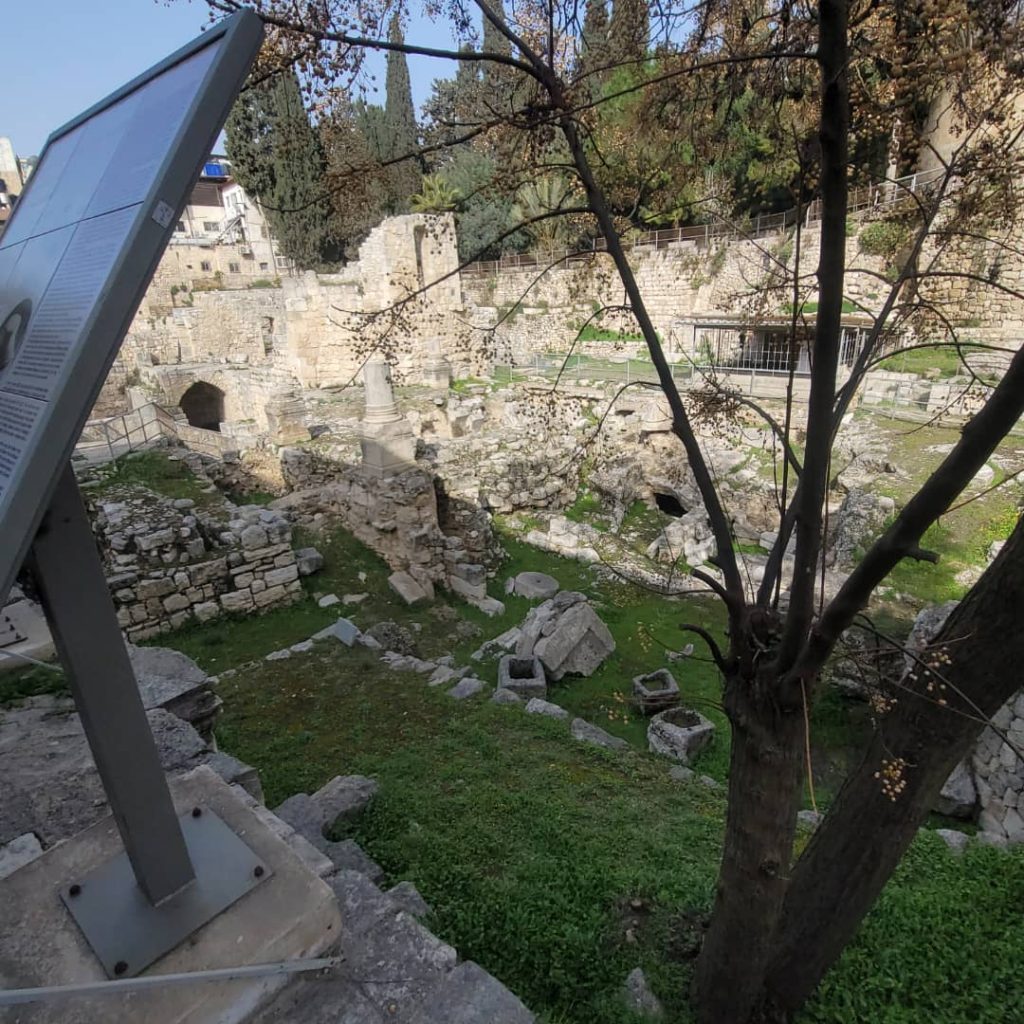
The Pool of Bethesda, located in Jerusalem, Israel’s ancient capital, has a rich history dating back to the 8th Century BC.
Originally, it was a reservoir constructed during King Hezekiah’s reign, likely used for collecting rainwater and supplying the Temple. The pool’s name, “Bethesda,” means “House of Mercy” in Aramaic, reflecting its association with healing and spiritual significance.
Historical Significance
The pool is famously known as the site where Jesus healed a paralyzed man, as described in John 5:2-9. This miracle highlights Jesus’ power and compassion, showcasing his ability to bring hope and healing to those in need.
Architectural Features
The structure consisted of two basins, separated by a wall, with five porticoes (or covered colonnades) surrounding it. This unique architecture provided shade and shelter for those seeking healing and solace.
Evolution Over Time
Throughout history, the Pool of Bethesda underwent transformations. The Romans built a pagan temple dedicated to Asclepius, the god of healing, near the pool. Later, a Byzantine church was constructed over the site, commemorating the miracle performed by Jesus. The Crusaders also built a chapel, which still stands today.
Archaeological Discoveries
Excavations in the 19th century uncovered the pool’s remains, confirming its existence and validating the biblical account. Today, visitors can explore the site, marveling at the ancient architecture and reflecting on the profound events that took place there.