
For decades, attacks on Christian communities in the Northern part of Nigeria had been largely ignored by the international community, particularly the United States, which frowns on acts of religious persecution across the world.
But that changed after the Bishop of the Catholic Diocese of Makurdi, in Benue State, Bishop Wilfred Anagbe, reported the killings to the U.S. Congress.
Indeed, Bishop Anagbe had testified before the U.S. House Subcommittee on Africa on several occasions in a bid to draw international attention to the heinous crime being committed in Nigeria, mainly by Islamic militia hiding behind the farmer-herder crisis in the country, especially in the Middle Belt region.
Following his complaints, in November 2025 Bishop Anagbe, alongside other Nigerians, was called upon again to testify before the U.S. Congress, a session that was televised across Nigeria from Washington D.C., bringing the issue to the front burner.
That public hearing itself came after President Donald Trump threatened military action against the terrorists if the Nigerian government failed to end what he described as genocide against Christians. He went further to declare Nigeria as a Country of Particular Concern.
U.S. Delegation In Nigeria
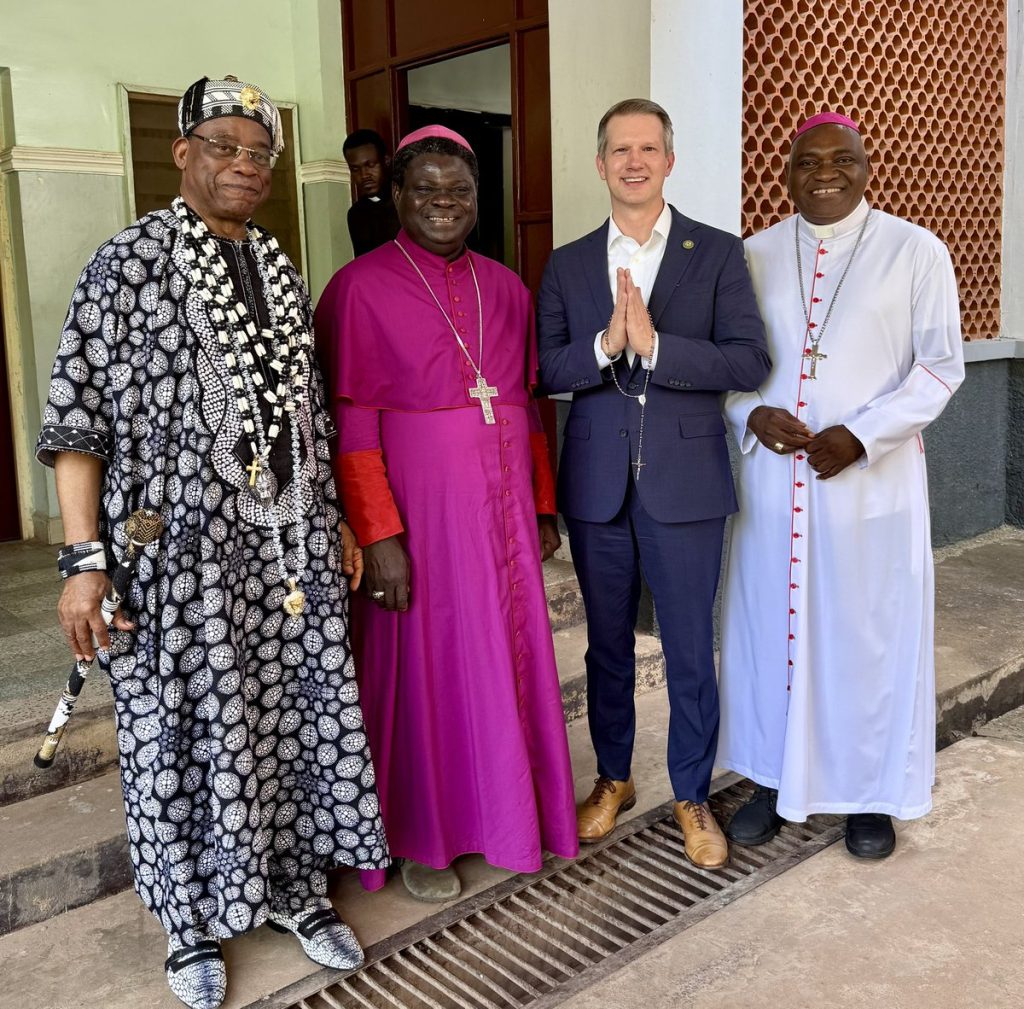
Following the public testimonies, the U.S. government took another significant step to address the escalating violence, by sending a fact-finding delegation to Nigeria. Led by Congressman Riley Moore, the delegation met with survivors of the attacks who are now internally displaced persons (IDPs), Christian leaders, and traditional rulers in Benue State, one of the states most hit by the violence.
The people narrated harrowing stories of brutality and violence to the visitors, including accounts of whole families being killed, and others being forced to watch as their loved ones were murdered in cold blood.
“One woman was forced to watch as they killed her husband and five children. She, and her unborn child, barely escaped,” Moore narrated in his X handle following the visit.
“There are more than 600,000 Christians in IDP camps in Benue State alone. These Christians should be able to live in their ancestral homeland without fear of genocidal Fulani,” he added.
During the visit, the delegation also met with traditional leaders and clerics, including Bishop Anagbe, Bishop Isaac Dugu, and the traditional ruler of the Tiv, James Ioruza, to receive first-hand accounts on the violent campaign by the Fulani militia in Benue State.
“Our brothers and sisters in Christ will no longer suffer in silence. The United States has heard your cries and we are working diligently toward solutions,” he wrote.
Before their visit to Benue, Moore’s delegation met with Nigeria’s National Security Adviser, Nuhu Ribadu, and the Attorney General of the Federation, Lateef Fagbemi, in Abuja as part of the efforts to find ways to counter the terror campaign in the country, which has claimed thousands of lives, including those of Muslims.
Not Farmer-Herder Crisis
Moore, however, made it clear that the violence is not driven by land disputes or climate issues, as many are made to believe, but rather a deliberate attempt to erase Christians from their ancestral homeland. He called for urgent action from both the Nigerian and U.S. authorities to address the violence.
On the outcome of the meeting with the NSA, Moore wrote: “The US’ sense of urgency on our concerns was positively received. I feel that a cooperative security framework is within sight. The now established joint task force between Nigeria and the US is a great example.”
He emphasized the openness and willingness on the part of the Nigerian government to work with the United States to tackle what he described as “these critical issues”.
“Now, that openness has to translate to concrete action. There is much work still to be done, but things are moving in the right direction. I look forward to the next steps with Nigerian government and the continued open dialogue,” he added.
We Won’t Look away
As the Congressional delegation ended the visit, Moore reiterated that the U.S. would not look away from the violence, kidnappings and killings against Christians in Nigeria, as it considers sanctions and Pentagon engagement to compel the Nigerian government to better protect Christian communities and promote religious freedom. For the U.S, government, it would not sit by and watch another Rwanda experience in Nigeria.
On its part, the Nigerian government has repeatedly denied claims of genocide or systematic persecution of Christians in the country, and maintains that insecurity affects Nigerians irrespective of whether they are Christians or Muslims.
The nature of the report on the fact-finding visit by Moore’s delegation, outlining recommendations for addressing the situation in Nigeria will determine the next line of action by President Trump.