


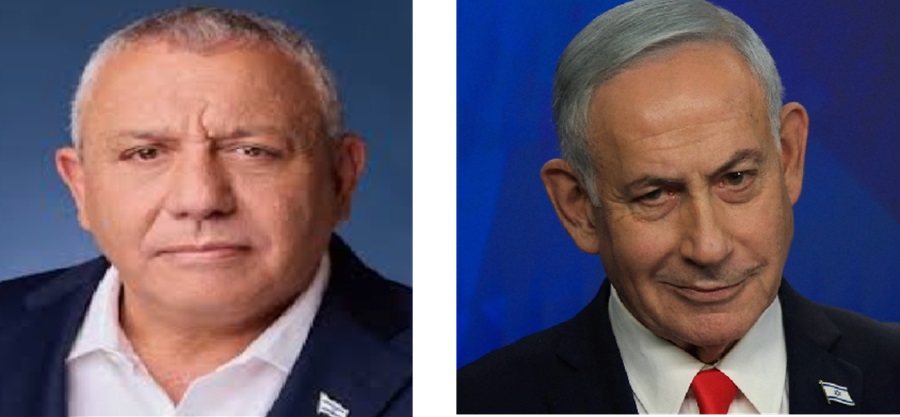
Israel is set to go to the polls not just to choose a parliament, but to answer one existential question: Who can keep the country alive?
This is not a normal election. It is coming three years after October 7, 2023 in the middle of a multi-front war that has still not ended — Gaza, Lebanon, Iran, Yemen, Judea and Samaria. Rockets still fly. Hostages’ families still protest. Reservists still serve 200 days a year. And Israelis are exhausted.
Two men dominate the conversation on the streets of Tel Aviv and Jerusalem.
The Incumbent: Mr. Security
For his supporters, Netanyahu remains the only leader strong enough to navigate hostilities. At 77, contesting what may be his final election as leader of Likud, his message is simple: “In a world of wolves, you don’t change the shepherd.”
Likud is polling at 19-22 seats — making it the second-largest party but still the anchor of a right-religious bloc that is polling between 48 and 53 seats, just short of the 61 needed for a majority.
For right-wing voters in Ashkelon, Sderot, and the settlements, the memory of October 7 is not an argument against Netanyahu — it is proof that Israel cannot afford experiments.
They fear a divided leftist coalition will bring a Palestinian state and stop the war too soon.
The Challenger: The General Who Would Be Peacemaker?
For his opponents, change is survival. Former IDF Chief of Staff Lt. Gen. Gadi Eisenkot, leader of the new party Yashar, is leading in almost every poll as the largest party with 20-23 seats. A Channel 12 poll last week put him ahead of Netanyahu 43% to 38% on suitability for Prime Minister.
Israelis see in him what they saw in Eisenhower — a war general who can end wars. He was in the War Cabinet after October 7, lost his son Gal and his nephew in Gaza, and then resigned, accusing Netanyahu of putting politics over strategy.
That moral credibility is resonating, especially with centrist, secular and reservist families. His bloc — Yashar, together with Naftali Bennett and Yair Lapid’s joint list B’Yachad (polling 12-15 seats), Yisrael Beiteinu, and the Democrats — is polling at 51-55 seats. Also short of a majority.
The math is the nightmare: Neither bloc has 61. The balance will be held by 14 Arab party seats and 4 seats for the Reservists-Economic Party of Yoaz Hendel. That means Israel could face weeks of coalition talks, or worse — another election.
What The People Are Saying
On the ground, the divide is emotional, not ideological. In a poll by N12 at a Mahane Yehuda market, a voter said: “I voted Bibi all my life. But my son has done 300 days in Gaza. I need a leader who knows when to stop.” Another in Likud headquarters said: “Eisenkot is a great general, but he will be eaten alive by Iran. Only Netanyahu can stare down America and Iran at the same time.”
For Kingdom watchers, this election is prophetic. Israel is looking for a man who can guarantee security — a yearning the Bible says will culminate in a false peace covenant. Tuesday’s vote will not just decide who sits in the Prime Minister’s office in Jerusalem. It will reveal whether Israelis believe survival lies in continuing the fight, or in a new general who promises to fight differently.
For now, the country remains split down the middle — 52 vs 52 — waiting for a verdict only God can give.
Kingdom Times is committed to providing Kingdom-based interpretations of unfolding global events. Stay connected to Kingdom Times for more faith-based insights, prophetic perspectives, and inspiring stories shaping the destiny of nations.