

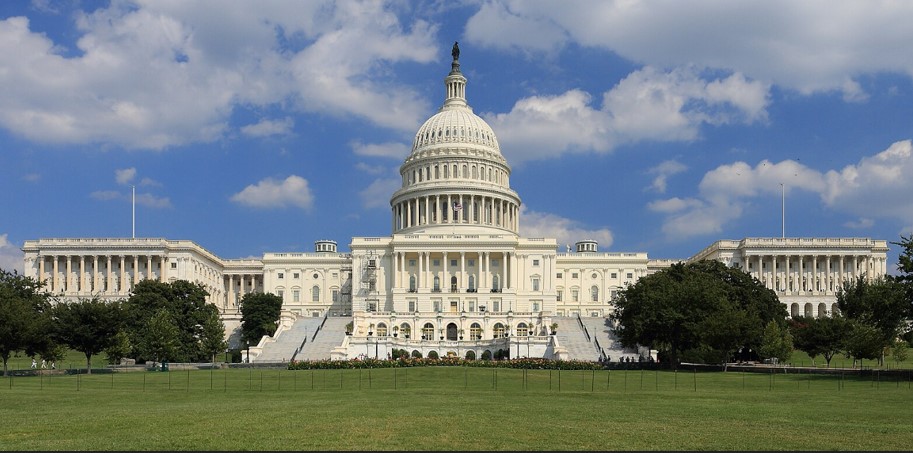
The United States House of Representatives will hold a fresh congressional hearing on Christian persecution in Nigeria on Thursday, November 12.
The exercise comes almost one year after President Donald Trump redesignated Nigeria as a ‘country of particular concern’ in November 2025 over alleged violations of religious freedom, especially in parts of the North.
The hearing will assess the country’s efforts to protect Christians as well as non-radical Muslims, and secure the Middle Belt, which has been the hotspot of attacks on Christians for decades.
A statement from the office of Republican lawmaker Chris Smith, Chairman of the House Foreign Affairs Subcommittee on Africa on Monday, explained the objective of the hearing.
It will assess “the current state of religious violence perpetrated by radical Islamists, such as Boko Haram and Fulani terrorists, against Christians in Nigeria; the Nigerian government’s efforts to curb the persecution and punish those responsible for committing atrocities against Christian and non-radical Muslim communities; and the steps the United States can take to ensure that Nigerian officials are addressing and preventing the systemic violence against Christians and non-radical Muslims by Islamist extremists.”
This latest spotlight on Nigeria will seek to establish whether the government of President Bola Tinubu has done enough in the last one year to protect Christians in the Middle Belt, or whether the U.S. should push for stronger action.
The hearing which is scheduled to hold at the Rayburn House Office Building in Washington, DC at 11am, will be streamed live on YouTube, and will be chaired by Smith.
For decades, attacks on Christian communities in the Northern part of Nigeria had been largely ignored by the international community, particularly the United States, which frowns on acts of religious persecution across the world.
But that changed after the Bishop of the Catholic Diocese of Makurdi, in Benue State, Bishop Wilfred Anagbe, reported the killings to the U.S. Congress.
Indeed, Bishop Anagbe had testified before the U.S. House Subcommittee on Africa on several occasions in a bid to draw international attention to the heinous crime being committed in Nigeria, mainly by Islamic militia hiding behind the farmer-herder crisis in the country, especially in the Middle Belt region.
Following his complaints, in November 2025 Bishop Anagbe, alongside other Nigerians, was called upon again to testify before the U.S. Congress, a session that was televised across Nigeria from Washington D.C., bringing the issue to the front burner.
That public hearing itself came after President Donald Trump threatened military action against the terrorists if the Nigerian government failed to end what he described as genocide against Christians.
U.S. Delegation In Nigeria
Following the public testimonies, the U.S. government took another significant step to address the escalating violence, by sending a fact-finding delegation to Nigeria. Led by Congressman Riley Moore, the delegation met with survivors of the attacks who are now internally displaced persons (IDPs), Christian leaders, and traditional rulers in Benue State, one of the most hit by the violence.
The people narrated harrowing stories of brutality and violence to the visitors, including accounts of whole families being killed, and others being forced to watch as their loved ones were murdered in cold blood.
During the visit, the delegation also met with traditional leaders and clerics, including Bishop Anagbe, Bishop Isaac Dugu, and the traditional ruler of the Tiv, James Ioruza, to receive first-hand accounts on the violent campaign by the Fulani militia in Benue State.
Before their visit to Benue, Moore’s delegation met with Nigeria’s National Security Adviser, Nuhu Ribadu, and the Attorney General of the Federation, Lateef Fagbemi, in Abuja as part of the efforts to find ways to counter the terror campaign in the country, which has claimed thousands of lives, including those of Muslims.
Not Farmer-Herder Crisis
Moore, however, made it clear that the violence is not driven by land disputes or climate issues, as many are made to believe, but rather a deliberate attempt to erase Christians from their ancestral homeland. He called for urgent action from both the Nigerian and U.S. authorities to address the violence.
But the Nigerian government has repeatedly denied claims of genocide or systematic persecution of Christians in the country, and maintains that insecurity affects Nigerians irrespective of whether they are Christians or Muslims.