To commemorate the 250th anniversary of American independence, several national events and initiatives have been organized across the United States.
As part of the broader activities planned to mark the semiquincentennial, the 250th anniversary of the July 4, 1776, Declaration of Independence, a public-private initiative known as Freedom 250 has organized “Rededicate 250: A National Jubilee of Prayer, Praise & Thanksgiving.” The event is intended as a time to reflect on what supporters describe as the providential moments that shaped the nation’s founding, as well as personal testimonies of healing and renewal in the present.
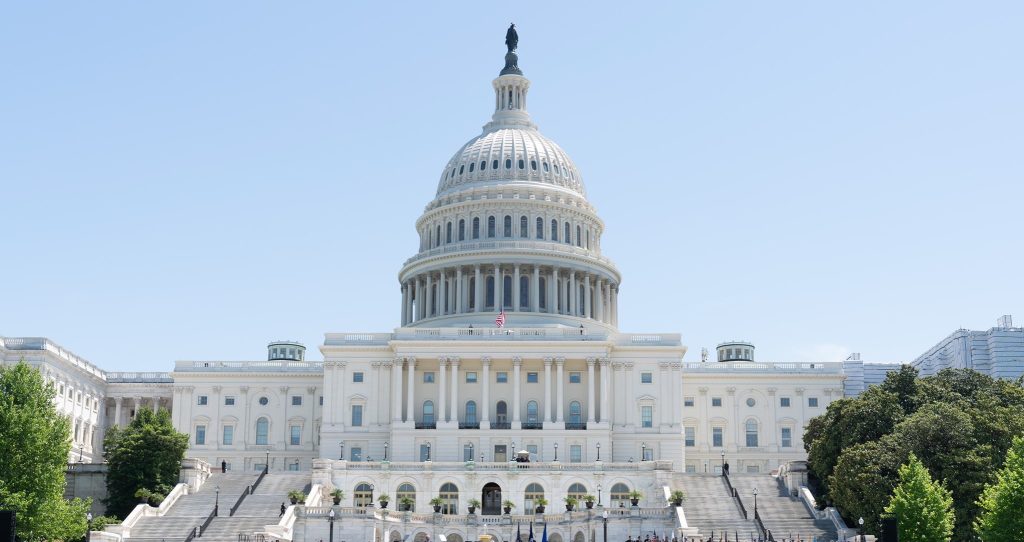
Rededicate 250 is scheduled to take place on Sunday, May 17, 2026, on the National Mall in Washington, D.C., as one of the major opening events in the run-up to the 250th anniversary. The programme will feature scripture reading, prayer, music, and speeches from prominent faith and political leaders. Its central theme is the symbolic “rededication” of the nation to God as “One Nation,” together with prayers for blessing and guidance in the nation’s next 250 years.
Although, Rededicate 250 is the initiative of Freedom 250, the group has support from figures in the Trump administration as well as from a wide range of churches and ministries, including prominent conservative Christian leaders such as Paula White, Franklin Graham, Samuel Rodriguez, and Robert Jeffress.
Background To Rededicate 250
The idea behind Rededicate 250 is not new. It has historical precedent in an event on March 16, 1776, when the Second Continental Congress, which governed the American colonies during the Revolutionary War, proclaimed a national day of fasting, prayer, and humility. U.S. political leaders have also often called for religious observance during times of crisis or major transition. However, such observances are symbolic and voluntary, not constitutional mandates, because the U.S. Constitution does not establish a national religion.
It is open to debate the widely held belief that the founding fathers of the USA dedicated the nation to God. The United States of America is a secular republic with no official religion, although Christianity has been central to its identity and has strongly influenced its culture and institutions.
In 1776, before independence, what became the United States consisted of 13 British colonies that still owed allegiance to the Crown. Society was largely rural and agricultural, but also deeply divided by class, race, and gender. Slavery remained legal and central to the economy, while Native Americans were largely excluded and displaced.
The freedoms of the time applied mainly to white male property owners, as women could neither vote nor hold public office. Although Protestant Christianity shaped life in many colonies, Jews, Catholics, and other Protestant groups also helped shape the emerging ideas of religious liberty, democracy, and individual rights that later influenced the Constitution. Thinkers and leaders such as Thomas Jefferson and Benjamin Franklin helped advance these ideals.
Leaders Who Helped Shape The Present
This helps explain why events like Rededicate 250 look back on this period as the birth of the Republic. It is also widely held that, while George Washington helped unite the colonies and provide stability and structure for the new nation, Thomas Jefferson gave it much of its guiding vision and ideals.
American presidents have played a major role in shaping how faith interacts with public life from the founding era to the present. Although the U.S. Constitution separates church and state, presidents have still influenced religious culture, public values, and expressions of faith in national life.
For some leaders, religion provided moral language for national identity and purpose. Abraham Lincoln, for example, invoked faith in framing slavery as a moral wrong, while Theodore Roosevelt and Woodrow Wilson often used religious language to give moral weight to national missions and wartime sacrifice. During the Cold War, religion became even more closely tied to national identity: “In God We Trust” became the official U.S. motto in 1956 and began appearing on paper currency in 1957, while “under God” was added to the Pledge of Allegiance in 1954.
In more recent administrations, including those of George W. Bush, Barack Obama, Donald Trump, and Joe Biden, presidents have more openly engaged a wider range of religious communities, including Christians, Muslims, and Jews, while also facing deeper debates over religious freedom, civil rights, and the role of faith in lawmaking. As a result, prayer, personal belief, and moral conviction remain visible in American politics, even as they also reflect and deepen social division.
Supporters of events like Rededicate 250 see them as signs of spiritual renewal, while critics view them as an unconstitutional blending of religion and politics. The debate over church-state boundaries continues to shape court rulings, constitutional interpretation, and education policy, leaving the United States in an ongoing search for balance between faith as a public force and faith as a private right.
- Washington: religion as a support for unity and public virtue
- Jefferson: religion should remain separate from state power
- Lincoln and others: faith can give moral meaning to national struggle
- Modern presidents: navigating a religiously diverse and politically divided society
Religious groups, especially evangelicals, became even more active in American public life during the late 20th century, particularly under the administrations of Jimmy Carter and Ronald Reagan. Issues such as abortion, family values, and education increasingly came to be framed in religious terms.
Today, faith remains a major influence on voting patterns in the United States. At the same time, the 21st century has brought greater religious diversity and sharper disagreement over the place of religion in public life, making the relationship between faith and politics both more visible and more contested.
Over the decades, American history has often reflected a continuing tension between two impulses: the need for unity, strong leadership, and stable government, often associated with George Washington, and the pursuit of liberty, democracy, and individual rights, often symbolized by Thomas Jefferson. In modern politics, this tension has widened into a broader cultural and religious divide. Democrats are often associated with more secular and religiously diverse positions, while Republicans tend to attract a larger share of voters with strong religious identities, especially conservative Christians. This divide is sometimes described as the “God gap.”
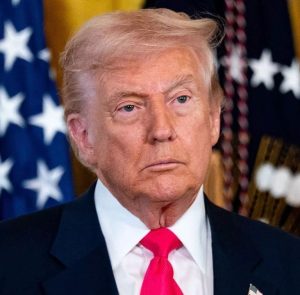
In summary, the first three U.S. presidents—George Washington, John Adams, and Thomas Jefferson—generally approached religion in a restrained, philosophical, and civic-minded way. More recent presidents, including Barack Obama, Joe Biden, and Donald Trump, have treated religion as more openly personal, public, and politically consequential. Trump, in particular, has had a strong connection with evangelical Christians and has frequently linked religion with national identity, cultural heritage, and the idea of America as “one nation under God.”
More broadly, religion now plays a larger and more visible role in public life than it did in the early republic. At the same time, it remains open to debate whether the increased political visibility of church leaders has strengthened the church’s moral witness or weakened its broader social impact. The enduring principle remains that religion should be protected from government control, even as modern presidents have increasingly used it as a public and political force.
Successive American presidents and political leaders have continued to proclaim the nation’s core ideals of equality, personal rights, and freedom—principles that helped shape its identity and inspire its people. At the same time, these same ideals have also generated tensions that have tested the stability and structure of the nation. Modern American society remains marked by an ongoing struggle to define the proper balance between order and liberty, unity and individual freedom, and central authority and personal autonomy.
A further question follows: how closely have later generations of American leaders and citizens followed the example of the founders, and in what ways has the nation changed over time?
A related question remains: have such symbolic religious acts strengthened the church’s moral witness, or have they mainly increased its political visibility without deepening its spiritual influence?
America was not founded as a Christian nation in any formal constitutional sense, even though religious morality strongly influenced much of the founders’ thinking. The Declaration of Independence, for example, contains general references to God, but these are broad religious references rather than specifically Christian doctrinal statements.
No founding government document establishes Christian doctrine as the basis of the state, nor do they invoke Jesus Christ as the authority of government. The First Amendment, adopted in 1791, makes this especially clear by forbidding the establishment of a national religion and protecting the free exercise of faith.
At the same time, many of the founders believed religion was important to public morality and social order, even while insisting that government should remain institutionally separate from religious authority. Because most early American settlers were Christians, Christianity deeply shaped the nation’s culture, social life, and moral vocabulary. This has contributed to the common belief that America was founded on Christian principles.
Yet that claim is better understood as a cultural and historical interpretation than as a legal or constitutional fact. In this sense, the United States has long combined strong religious influence with a formally secular constitutional structure.
Even under one of the most openly religious presidents, Jimmy Carter—an evangelical Christian and Sunday school teacher who frequently spoke about prayer and faith in public life—the nation remained constitutionally secular. Most presidents have therefore tried, in different ways, to avoid binding the state to religious dogma, even when they have openly drawn on faith in their public rhetoric.
President Donald Trump, though not widely regarded as doctrinally religious, has nevertheless exercised strong influence in religious politics by aligning himself closely with conservative Christian movements and framing religion as part of national identity.
Over the years, these debates have produced both inspiring public expressions of faith and recurring disputes over national identity, constitutional limits, and the proper place of religion in American public life.