Rising Cost Of Faith In World’s Most Dangerous Places
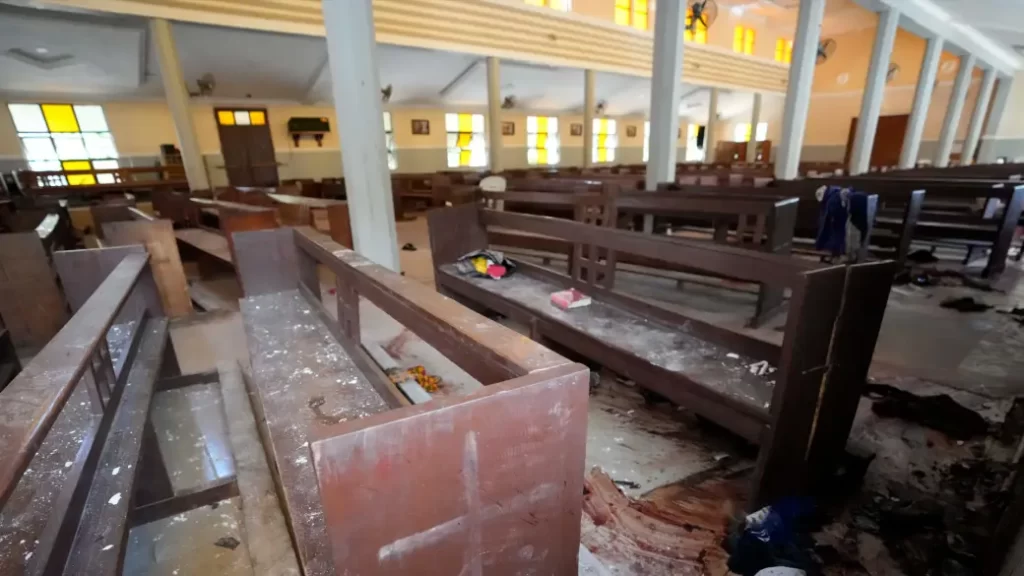
On a Sunday morning on June 5, 2022, worshippers gathered at St. Francis Catholic Church in Owo, Ondo State, Nigeria. By the end of service on that Pentecost Sunday, more than 40 people were dead, and many others injured.
The attackers didn’t ask for money. They asked no questions. The reason given by survivors and analysts was simple: the victims were Christians. It was the most brutal, callous and bestial attack perpetrated by Islamic terrorists in Southern Nigeria.
Similar deadly, unprovoked attacks are still the order of the day in Northern Nigeria and other parts of the country, where many in the predominantly Muslim population constantly display unabashed intolerance for Christianity.
The question many believers in Nigeria and around the world are asking is the same: Who is afraid of Christianity?
The Numbers Tell a Story
Christianity is the largest faith in the world, with over 2.6 billion adherents. Yet it is also, according to multiple global monitors, the most persecuted religious group today.
According to the Open Doors World Watch List 2025, 380 million Christians live in places where they experience high levels of persecution and discrimination for their faith. That’s 1 in 7 Christians globally, and 1 in 5 in Africa.
The report documented:
– 4,476 Christians killed for faith-related reasons between Oct 2023 and Sept 2024
– 4,830 churches and Christian properties attacked or closed
– 3,906 Christians detained without trial, arrested, or imprisoned
Another major tracker, Aid to the Church in Need’s Religious Freedom Report 2024, found that religious freedom is violated in 61 countries. In 28 of those, the situation is classified as “persecution.” Christians are the primary victims in the majority.
The Pew Research Centre also noted that Christians were harassed in 160 countries in 2022, the highest of any religious group. The pressure is heavier is some regions than others.
Sub-Saharan Africa
Nigeria remains the deadliest country for Christians. Open Doors 2025 report has it that 3,100 of the 4,476 Christians killed globally last year were in Nigeria. That’s 69% of all faith-related Christian deaths worldwide.
Beyond killings, thousands have been displaced. In the Middle Belt and Northeast of Nigeria, entire Christian farming communities have been overrun, with churches burned and villages emptied. The International Society for Civil Liberties and Rule of Law estimates over 18,000 churches have been attacked or destroyed in Nigeria since 2009.
Sub-Saharan Africa is currently the global epicentre of jihadist violence, and Nigerian remains the hotspot of terror activities, with ISWAP and other transnational groups and their local affiliates targeting Christian communities, churches and moderate Muslims.
However, other countries in the Sub-Saharan Africa such as Mali, Niger, Burkina Faso, Benin Republic, Democratic Republic of Congo, Mozambique, Somalia and others continue to face attacks by terror Islamic groups. Their mostly Christian-majority villages and towns are continuously raided and sacked, with many killed by these groups.
The Middle East & North Africa
In North Africa and other Muslim-majority countries like Iran, Afghanistan, and parts of Iraq and Syria, Christians face severe persecution, and conversion from Islam to Christianity can mean prison, loss of custody of children, or even death. Churches operate underground.
In Iran, where thousands are converting from Islam, Christians are an endangered group, with many arrested following raids on underground churches. This has been ramped up in recent times following the war between the Islamic Republic of Iran and the United States and Israel.
Asia Region
North Korea remains ranked number one on the World Watch List; where owning a Bible can lead to labour camps. In China, an estimated 10,000+ house churches have been shut down or pressured since 2018. In India, United Christian Forum recorded 720 incidents of violence against Christians in 2024, up from 601 in 2023. Most involved attacks on prayer meetings and pastors.
Triggers of Persecution
Groups and experts monitoring persecution across the world point to 4 main drivers of the attacks. The foremost driver globally is Islamic Intolerance, making up 15 of the top 20 World Watch List countries. This is followed by Authoritarian Paranoia, in countries – like North Korea, China, Eritrea – where governments see faith as a rival to state control.
Then comes Ethnic Animosity in places where Christian identity is tied to a minority tribe, as in parts of Nigeria, Pakistan, and Myanmar.
The 4th driver is Organized Crime and corruption mostly in Latin America, where gangs target clerics who speak against violence and drugs. This is rarely about theology but about identity, power, and control. A growing Christian community represents values, education, and networks that can challenge the status quo.
The Cost Beyond Death
The statistics by watch groups don’t capture everything. There’s the 14-year-old girl in Pakistan forced to convert and married. The pastor in India jailed for praying for a sick man. The family in Burkina Faso or Iran who fled at night because their church was marked or their lives threatened with death.
The UNHCR estimates that faith is a factor in the displacement of millions. In Nigeria alone, over 3 million Internally Displaced Persons, IDPs, include a disproportionate number of Christians from the North, particularly in the North Central region.
Churches are not just places of worship. They are schools, clinics, and community centres. When 4,830 of them are attacked in a year, entire communities lose access to aid and hope.
But the Church Is Not Silent
Despite the pressure, Christianity continues to grow fastest in the very regions where it is most persecuted.
In Iran, house churches have multiplied. In Nigeria, believers in IDP camps still hold services under trees. In China, young people are meeting in secret. Rev. Dr. Thomas Schirrmacher of the World Evangelical Alliance puts it this way: “Persecution has never stopped the Church. It has only refined it.”
What This Means For Us
For Christians in Nigeria, and across Sub-Saharan Africa and the West, the question “Who is afraid of Christianity?” is not abstract. It’s about brothers and sisters paying with their lives for the same faith we practice freely.
The Bible says “Remember those in prison as if you were together with them” Hebrews 13:3. That remembrance looks like prayer, advocacy, and telling their stories so the world cannot look away.
As one Nigerian widow whose husband was killed by gunmen said recently: “They can burn our church, but they cannot burn our God.” This spirit re-echoes the words of the Apostle Paul: “We are troubled on every side, yet not distressed; we are perplexed, but not in despair; persecuted but not forsaken; cast down but not destroyed” 2 Cor. 4:8-9.
What the persecution reveals is clearly the same age-old conflict between good and evil. The Christian faith is a force for good in the world, one which message preaches love and not hate, peace and not violence.
A faith that is an anchor for the hopeless, the power for overcoming every form of darkness and the hope for eternal life. Think about why a faith that holds these values would inspire fear in anyone to trigger persecution. Now, flip the coin and what do you see on the other side?