


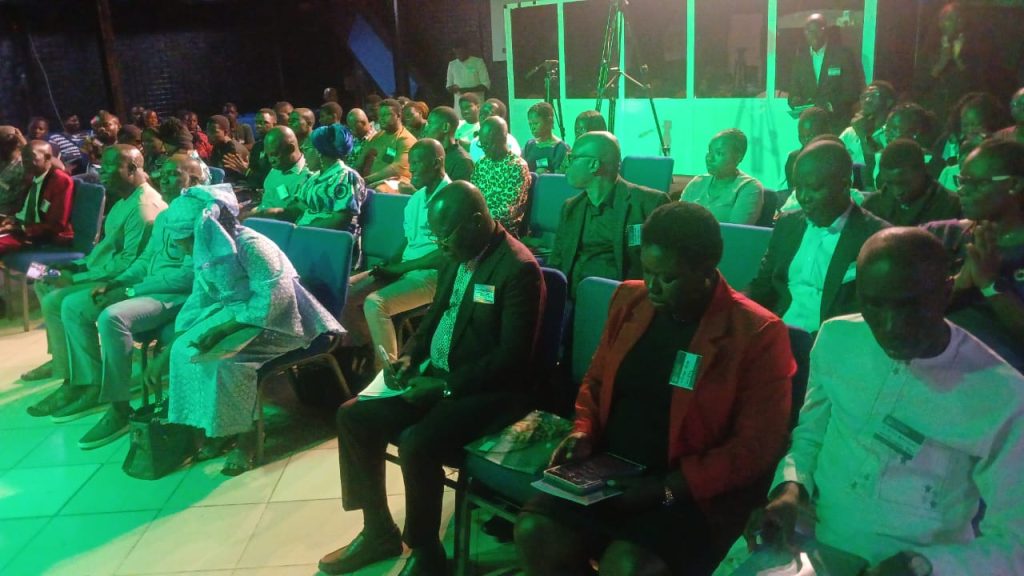
The 2026 edition of the Global Leadership Summit (GLS) has challenged Christians to embrace purposeful, value-driven leadership. It called on leaders to inspire others, develop people and build organisations that can thrive beyond their tenure.
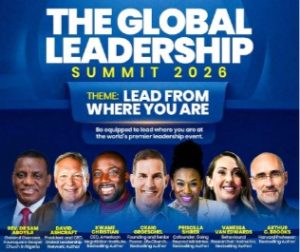
The summit held on November 14, at the Blast Arena, Foursquare Gospel Church National Headquarters in Lagos, had as its theme, “Lead From Where You Are”.
The event featured leadership teachings from renowned international speakers, including David Ashcraft, Kwame Christian, Priscilla Shirer, Vanessa Van Edwards and Arthur C. Brooks.
Speaking on the importance of leadership, the General Overseer of the Foursquare Gospel Church in Nigeria, Rev. Sam Aboyeji, said the success or failure of any institution is directly linked to the strength of its leadership.
“Leadership is influence. And the enormous influence of a leader is best captured by the assertion of Alexander the Great when he said, ‘I am not afraid of an army of lions led by a sheep; I am afraid of an army of sheep led by a lion.’ In other words, everything rises and falls on the leader,” he said.
According to him, leadership is an inherent potential in every individual, regardless of gender or personality type, and authentic leadership is demonstrated through the ability to inspire, motivate and empower others rather than control or manipulate them.
“Leadership is about empowering people. Leadership is not about manipulation, but inspiration. And leadership is not about oppressing or ruling people, but leadership is about pursuing a God-given vision and pursuing a purpose,” he said.
This was reinforced by discussions on the importance of interpersonal relationships and recognizing the value each individual brings to an organisation.
This was the central focus of Vanessa Van Edwards’ presentation. She noted that a leader’s ability to relate effectively with people was central to their success.
She encouraged leaders to deliberately recognise and communicate the good they see in others, activate their potential and identify the unique skills and expertise each person brings to the table. According to her, “To be likeable, all you have to do is like others.”
She also challenged the notion of low performers, explaining that people often thrive when their abilities are recognized and properly utilised. She urged leaders to focus on helping others recognize their impact rather than making leadership solely about their personal achievements.
Leaders Build Strong Organisations
Beyond developing people, the summit also highlighted the importance of building organisations that would remain effective even after their leaders had moved on.
David Ashcraft stressed that leadership should not be measured only by present achievements but by what remains after a leader’s departure.
“Leadership is not what you achieve in the present but what endures after,” he said.
He described a level-five leader as someone who leaves an organisation in a better condition than they found it, introducing the concept of a “better-when-I’m-gone” leader.
Ashcraft warned against allowing pride and personal attachment prevent leaders from preparing others to take over their responsibilities. He identified time and pride as two major considerations in succession planning, noting that leaders who delay preparing successors risk making the transition difficult for their organisations.
The need for effective leadership was also linked to the ability to manage difficult conversations and resolve disagreements. Kwame Christian noted that being right was not necessarily the same as being persuasive, stressing that leaders must develop the ability to listen, remain curious and manage their emotions when engaging with others.
“There is a difference between being right and being persuasive,” he said. He encouraged leaders to acknowledge and validate people’s emotions, ask open-ended questions and adopt a joint problem-solving approach when addressing disagreements. “The best things in life are on the other side of difficult conversations,” Christian added.
Spiritual Leadership
Meanwhile, Priscilla Shirer drew attention to the spiritual demands of leadership, urging Christians to cultivate a deeper relationship with God and make time to listen for His direction.
Using the illustration of marinating chicken to explain the importance of spending time in God’s presence, she encouraged leaders not to become so occupied with the demands of their responsibilities that they lose sight of God.
She also warned that while leadership requires passion and purpose, the pressure of constant demands could gradually take a toll on both.
On his part, Arthur Brooks challenged participants to examine how technology and excessive dependence on digital devices were shaping their lives and relationships.
He described modern society as increasingly disconnected from meaningful human experiences, urging people to establish technology-free periods and spaces, particularly during the first hour of the day, mealtimes and the last hour before sleeping.
“Use things, love people, worship the Divine,” he said, describing what he considered a healthier approach to life.
How It All Began
Speaking on the motivation behind bringing the summit to Nigeria, host of the Global Leadership Summit, Pastor Tunde Ojo, explained that the event originated from Willow Creek Community Church in Chicago, United States.\
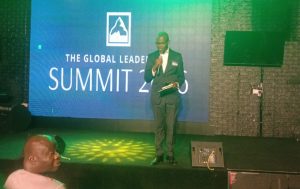
According to him, the live summit is usually held in August, after which its teachings are repackaged into videos and distributed to different locations across the world to make the lessons accessible to more people.
He explained that the initiative was built on two major convictions: that everyone has influence and that when leaders improve, the people and organisations under their leadership also benefit.
“Everybody has influence. So, everybody is a leader. Number two is that when the leader gets better, everyone gets better. Things improve. Progress comes,” Pastor Ojo said.
He explained that the summit had been hosted at the Foursquare National Headquarters for approximately 15 years, and was organised annually in collaboration with Vision International Christian Ministry, the franchise owners of the Global Leadership Summit across West and Central Africa.
He further noted that the summit provided an opportunity for leaders in the Christian community and the marketplace to interface.
“Christian leaders can learn from marketplace leaders, and marketplace leaders can also learn from Christians,” he said.
Also speaking, Pastor Francis Olubambi, Regional Director of the Global Leadership Summit for West and Central Africa, said the initiative was established to encourage Christian leaders to improve their leadership capacities in both church and workplace settings.
He described the Nigerian leadership situation as one requiring a stronger commitment to values, noting that the absence of value-driven leadership had contributed to the challenges confronting the country.
He expressed optimism that consistent efforts to establish foundations for excellent leadership would eventually produce meaningful change in the country.
Pastor Olubambi said that the long-term vision was to extend the summit’s reach into more communities, schools and universities, with the possibility of hosting future editions in public spaces such as town halls.
The 2026 Global Leadership Summit reinforced the need for leadership that goes beyond occupying positions of authority to creating meaningful impact, developing others and demonstrating values that can change organisations and society positively.