
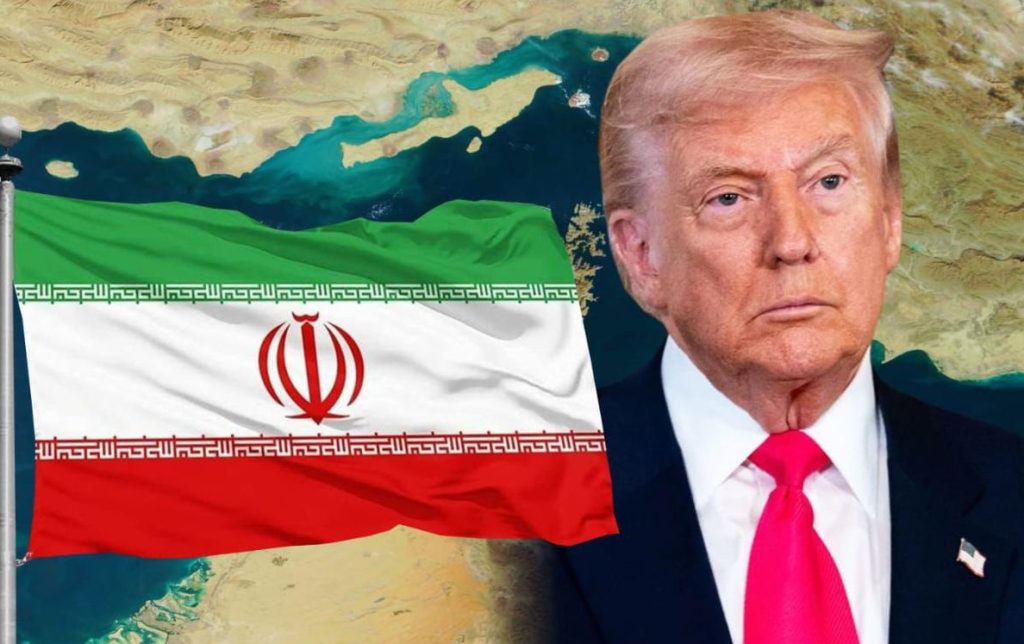
On the back of the announcement by President Donald Trump of a memorandum of understanding between the United States and Iran to end the latest Middle East War, global oil prices plunged and stock markets rallied.
This was fueled by the prospect of an end to energy supply and global economic disruptions, caused by the closure of the Strait of Hormuz. But beneath the international relief and economic optimism lies simmering anger on the part of Israel and deep skepticism among some analysts of geo-politics.
Regardless of whether the MoU between the U.S. and Iran stops the conflict, it will not end the age-old hatred the Islamic Republic harbours against Israel.
It is clear that domestic pressure, arising from harsh economic realities and the prospects of an electoral defeat for Republican candidates in the forthcoming mid-term elections across the U.S. pushed Trump to hurriedly sign off on the MoU. But a temporary truce with Tehran will not resolve the deeper crisis between Israel and its Arab neighbours.
In fact, to regard this peace deal as signifying the return of peace to the region is to show complete ignorance of eschatological timelines.
Peace Deal Addresses Symptoms
The core conflict is not just about ending the enrichment of uranium or dispute over missile ranges. It’s about land, identity, and theology. Israel’s neighbours dispute its right to exist as a Jewish state. Iran disputes it on ideological grounds.
As a result of this, the Islamic Republic will stop at nothing to secure nuclear weapons or any other device that will enable them accomplish their goal of wiping away Israel.
The 2020 Abraham Accords opened doors of normalization of Arab-Israel diplomatic relations with the United Arab Emirates, Bahrain and Morocco being the first to sign the deal, alongside Israel.
Some others followed suit later, with more Arab nations indicating willingness to become part of the agreement, but today the Palestinian question and Iran’s proxy network are a pain in the neck, and will likely remain so.
A U.S.-Iran deal can freeze enrichment. It cannot rewrite history and erase competing claims to Jerusalem by three different faiths. Paper agreements manage behaviour; they don’t transform hearts. And in the Middle East, hearts have long memories.
“Peace, Peace, When There Is No Peace”
Jeremiah 6:14 warns: “They dress the wound of my people as though it were not serious. ‘Peace, peace,’ they say, when there is no peace.” The prophet wasn’t against diplomacy. He was against false assurance.
Ezekiel 38 and 39 describes a future coalition of nations that comes against Israel when it dwells securely within unwalled villages. Note this: a season of perceived security precedes the conflict.
Zechariah 12:2-3 goes further: Jerusalem becomes a “cup of staggering” and a “burdensome stone” for all nations. This prophecy assumes that conflict is the default setting until the Messiah returns.
From that lens, every modern peace deal fits the pattern: partial, temporary, and ultimately unable to settle what prophecy says only God will settle.
The Realities
Even if the U.S. and Iran keep the peace deal, three realities remain: Proxy wars continue: Hezbollah in Lebanon, Houthis in Yemen, militias in Syria and Iraq. From hindsight, these actors don’t read treaties. Besides, if Iran is able to control Hamas, it doesn’t control the Palestinian Authority.
Here is where it gets more complicated. Contrary to President Trump’s optimism and false sense of victory, the signed MoU gives Iran the upper hand and will enable the IRGC dictate the compliance level in the coming days.
If Iran gets the $300b rebuilding fund as agreed, plus the unfreezing of its assets worth more billions of dollars; with its ballistic missile factory left intact, expect a shocking resurgence because the snake is still very much alive.
Israel’s Existential Question
For many in the Middle East, the issue isn’t necessarily Iran’s nukes; it’s more about Israel’s presence in the region. And there will be no diplomatic answer to this question. So, the deal may reduce one risk. It doesn’t remove the others.
In fact, what will eliminate Iran’s threat of total annihilation of Israel, in the interim, is the overthrow of the Islamic regime and obliteration of the Islamic Revolutionary Guard Corps, even though this will not totally remove the threat against Israel.
The End-time Conflict Is Regional
As pointed out earlier, Bible prophecy never frames the final crisis as “U.S. vs Iran” or any bilateral scenario. It’s a convergence of nations around Jerusalem. Psalm 83 lists Edom, Ishmaelites, Moab, Hagarenes and others — which are ancient names tied to modern Arab states.
Daniel 11 and Revelation 16 speak of kings from the east and a final gathering at Armageddon. The stage is set for regional war, not bilateral peace, and America will not help Israel fight this final war.
That means we should read each treaty with sober hope, not utopian expectation. Celebrate de-escalation where it happens but don’t mistake President Trump for the Prince of Peace.
Pray For Peace, Prepare For Prophecy
This is not a call to cynicism about diplomacy. Christians are commanded in 1 Timothy 2:2 to pray for kings and all in authority so we may live peaceful lives.
But if Scripture is right, Israel’s final security won’t come from a treaty signed at the Palace of Versailles in France. It will come when “they (Israel) shall look on Him whom they have pierced” as contained in Zechariah 12:10.
Until then, expect more deals, more tensions, and more reminders that only Christ can do what diplomats cannot. So, no peace yet for Israel. The deal may buy time. Only the King of kings buys everlasting peace.
Kingdom times is a non-denomenational Christian publication, which provides biblical-based interpretations of major global events. Stay connected for more faith-based insights, prophetic perspectives, and inspiring stories shaping history across nations.