
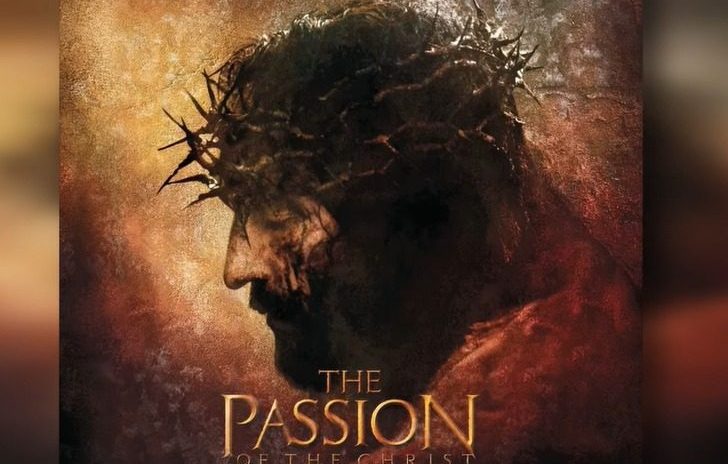
In the history of cinema, few films have blurred the line between performance and faith as profoundly as The Passion of the Christ.
Released in 2004 and directed by acclaimed filmmaker Mel Gibson, the film was not merely another Hollywood production about Jesus Christ. It became a cultural, spiritual, and commercial phenomenon that challenged industry assumptions and rewrote box-office records.
At a time when Hollywood was increasingly focused on action franchises, science fiction spectacles, and family-friendly entertainment, Gibson took an extraordinary gamble. He chose to tell the story of the final twelve hours in the life of Jesus Christ almost entirely in ancient languages—Aramaic, Latin, and Hebrew.
The film was subtitled, intensely graphic, and centred on a religious narrative that many believed would appeal only to a limited audience.
Industry experts predicted failure.
The conventional wisdom was simple: audiences would not flock to a subtitled film about the crucifixion of Christ. Major studios hesitated to support the project, concerned about its commercial viability and the controversy it might provoke.
Refusing to compromise his vision, Gibson personally financed much of the production, placing millions of dollars of his own money on the line.
What followed was one of the most remarkable success stories in film history.
Filmed primarily in Italy, The Passion of the Christ sought a level of authenticity rarely attempted in biblical cinema. Actor Jim Caviezel, who portrayed Jesus, endured physically demanding conditions during filming.
The production painstakingly recreated first-century Jerusalem and relied heavily on historical and biblical sources to capture the brutality, emotion, and spiritual significance of Christ’s suffering.
Yet long before the film reached theatres, controversy erupted. Religious scholars, cultural commentators, and media organizations debated its portrayal of the crucifixion.
Some criticized its graphic violence, while others questioned aspects of its theological interpretation.
Supporters, however, argued that the film offered an unflinching depiction of the sacrifice at the heart of the Christian faith.
The debate only heightened public curiosity.
When The Passion of the Christ premiered on Ash Wednesday in February 2004, it delivered a box-office performance that stunned Hollywood. Churches organized group screenings, pastors encouraged congregations to watch it, and word-of-mouth spread rapidly across continents.
What many expected to be a niche religious film became a mainstream cultural event. Audiences were not simply watching a movie; many described the experience as a spiritual encounter.
The film went on to earn more than $600 million worldwide against a production budget of approximately $30 million. It became the highest-grossing Christian film ever made and, for more than a decade, held the record as the highest-grossing non-English-language film in history.
Its domestic earnings in the United States shattered records for an R-rated film and established it as one of the most successful independent productions ever released.
The achievement was unprecedented. A film spoken in ancient languages had outperformed countless mainstream blockbusters. It demonstrated that faith-based storytelling, when executed with conviction and artistic ambition, could resonate far beyond traditional religious audiences.
More than twenty years after its release, The Passion of the Christ continues to occupy a unique place in cinematic history. It remains one of the most discussed religious films ever made, praised by many for its emotional power and criticized by others for its intense realism.
Regardless of where one stands in that debate, its impact cannot be denied.
The film’s enduring significance lies in its ability to transcend entertainment. For millions of viewers, it was not simply a performance depicting the suffering of Christ; it became an invitation to reflect on faith, sacrifice, redemption, and the meaning of the Gospel itself.
That is why The Passion of the Christ remains more than a movie. It is a landmark cultural event that proved faith could command the global stage and that a story told in ancient languages could speak powerfully to the modern world.
In an industry often driven by formulas and forecasts, The Passion of the Christ achieved what many considered impossible. It transformed a deeply personal expression of faith into one of the most successful films in cinema history, forever validating its place as a global phenomenon and one of the greatest box-office surprises the world has ever witnessed.