
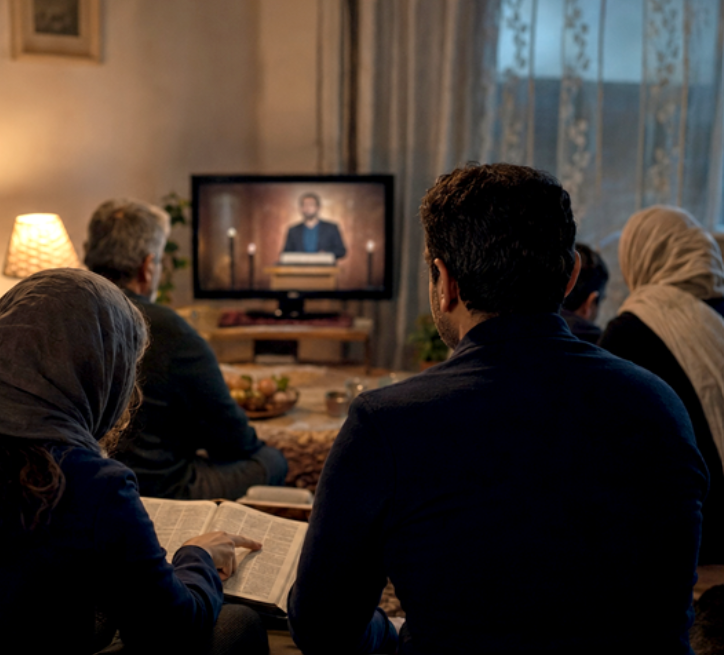
Iran’s Islamist regime has, for the first time, made it a crime to watch Persian-language Christian television broadcasts, including programmes aired by Iran Alive Ministries, a U.S.-based Christian organization.
Under a new espionage law, the government has officially designated Persian-language Christian satellite channels as “hostile organizations.” The move means that simply watching or sharing a Gospel broadcast can now be treated as “cooperation with an enemy of the state.”
The development has raised fresh fears of intensified persecution against Christians in Iran. Believers who engage with Christian media are already facing severe consequences, according to reports from ministry partners.
“They Can Ban the Channel, But Not the Signal”
Despite the crackdown, Christian organisations in Iran say the Gospel cannot be stopped.
“The regime may intensify its persecution, but there is one thing it cannot control: They can ban the channel, but they cannot arrest the signal,” a statement from Iran Alive Ministries said.
The group added: “They can criminalise watching. They can threaten those who share the Gospel. They can imprison believers. But they cannot stop what God is already doing in the hearts of the Iranian people.”
“The Stones Will Cry Out”
The ministry likened the current moment to Jesus’ words in Luke 19:40: “When the religious leaders demanded that He silence His followers, Jesus answered: ‘I tell you, if they keep quiet, the stones will cry out,’” the statement noted.
“That is what we are witnessing in Iran today. The regime is trying to silence the Gospel, but the Gospel will not be silenced.”
Iran Alive Ministries said the crackdown has produced the opposite of its intended effect.
“They may try to criminalize our broadcasts. They may try to silence the voices proclaiming Christ. But the very people they are attempting to quiet are becoming voices for the Gospel themselves.”
Human rights groups have long documented pressure on religious minorities in Iran. The new designation of Christian broadcasters under espionage laws is expected to increase surveillance and arrests of viewers and distributors of Christian content.
This development underscores a growing tension in Iran. As the state seeks to restrict religious expression, underground faith communities and satellite ministries report increased interest in the Gospel among Iranians.