Every political contest by any people anywhere in the world is only a physical manifestation of the contest of spiritual forces over that territory. From the moment authority over the earth was delivered to him by Adam, Satan and his cohorts have claimed delegated authority over political systems and earthly kingdoms (Luke 4:5-6).
So, they rule from the spirit realm (Eph. 6:12) by influencing the actions and behaviours of humans and consequently territories and nations, delaying the establishment of God’s purposes (Daniel 10:12-13, 20).
This does not mean that Satan owns the earth, for it is the Lord’s (Psalm 24:1). However, fallen spirit beings operate to exert territorial influence, seeking to blind people’s minds against God and resist His purposes for towns, cities and nations.
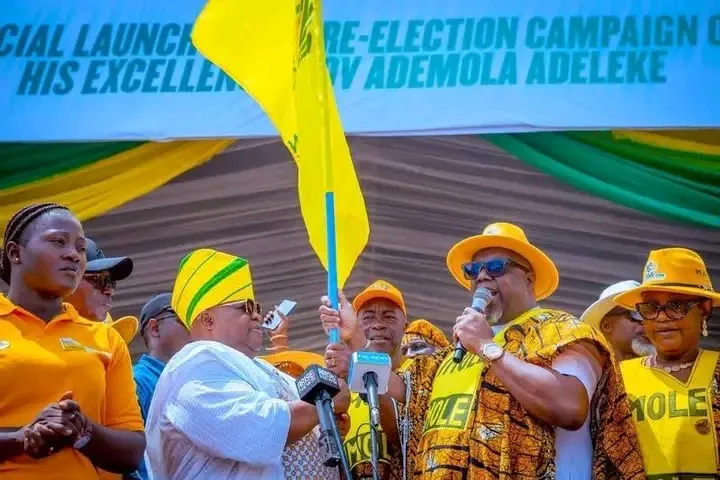
Therefore, those who understand this know that the race to take political leadership of cities and nations is not just a matter of campaign posters, rallies and elections. It is a spiritual battle, as it plays out in every election cycle, with the just-concluded 2026 governorship poll in Osun State being the latest of such exercise.
Osun: Land of Revival and Evangelical Giants
There are places whose history is written not only in the records of kings, wars and political movements, but also in the testimonies of faith, revival and generations of men and women who gave their lives to the spread of the Gospel.
Osun State is one such place. Its Christian story is remarkable, not merely because Christianity took root there, but because the state became a fertile ground for the emergence of some of Nigeria’s most influential Christian leaders, past and present.
From the early missionary presence of Anglican, Methodist and Baptist churches to the emergence of indigenous evangelical movements, Osun’s Christian history reveals a gradual transformation from Christianity introduced by missionaries to one increasingly led, shaped and exported by Nigerians themselves.
Scholars have identified the early presence of the major denominations in the state and the subsequent rise of Evangelical churches, with the Christ Apostolic Church at the forefront of this development.
The Ilesa Revival
At the heart of this story is the town of Ilesa and its environ, a part of Osun that has become almost synonymous with Nigerian Christian revivalism. The significance of Ilesa is difficult to discuss without mentioning Apostle Joseph Ayodele Babalola, one of the pioneering figures of indigenous Pentecostal Christianity in Nigeria.
Babalola’s experience at Ikeji-Arakeji in 1928, where he believed he received a divine call to preach the Gospel, marked the beginning of a ministry in Ilesa that would eventually transform the religious landscape of Yorubaland. And the story of the great Ilesa revival is one of the defining chapters of Nigerian Christianity.
His ministry helped demonstrate that Christianity in Africa was no longer simply a faith administered by European missionaries. Africans could themselves become powerful evangelists, revivalists and builders of Christian institutions.
From the revival fires associated with Babalola emerged one of the major indigenous Christian institutions in Nigeria, the Christ Apostolic Church. But the Christian story of Osun does not end with Babalola. The arrival in Ilesa in March 1937 by a British missionary, Sydney Granville Elton—fondly remembered as Pa Elton—kicked off another historically remarkable era in the advancement of the Christian faith in Nigeria.
Pa Elton became a bridge between indigenous Nigerian revivalism and international evangelical Christianity. He got involved in the continuing revival in Ilesa and later played an important role in facilitating the arrival and ministry of international evangelists, such as Gordon Lindsay and T. L. Osborn.
Enter Today’s Evangelical Giants
Perhaps the most compelling evidence of this Christian heritage is found in the remarkable number of influential ministers associated with the state, particularly the Ilesa area and its environs.
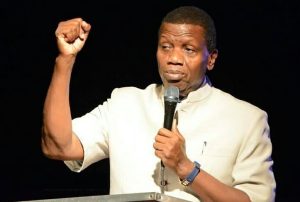
They include Pastor Enoch Adeboye of the Redeemed Christian Church of God, Pastor William Kumuyi of Deeper Christian Life Ministry, the late Prophet Timothy Obadare, Pastor Matthew Ashimolowo, Pastor Kayode Abiara and Prophet G. O. Fakeye, among others.
These men might not be resident in Osun, but their spiritual roots emanate from within the Christian heritage of the area and represent some of the most powerful expressions of the state’s continuing Christian influence.
There is no doubt that this important stream within the Christian heritage of Osun would have remarkable impact (with their prayer interventions) on the spiritual and political power dynamics in Osun, against the backdrop of powerful dark spiritual forces that had held sway in such territories prior to the Christian revival of the early 20th Century there.
Osun Violence and the Battle to Rule Nigeria
No one who understands spiritual power dynamics would doubt the involvement of dark forces in the violence that raged in Osun in the run-up to the state’s 2026 Governorship Election. The crisis might be explained away as stemming from political intolerance, greed, lust for power and so on. At the back of all that are the dark spirit beings controlling and influencing human behaviours and actions in the bid to retain or strengthen their hold on the territory, and or dislodge any semblance of righteous authority in opposition to its rule.
The story of Osun and the mortal fight for its leadership and control by unseen spiritual forces, as well as the human puns in the contest, are only a tiny reflection of the larger battle to rule Nigeria. This battle is currently underway and will be in full display ahead of the January 2027 Presidential Election.
Christians might well be reminded that, even as they join the contest at various levels, they must always remember that the forces that control the physical are unseen and must master the art of wielding their weapons through the Lord for positive outcomes in the physical realm.