


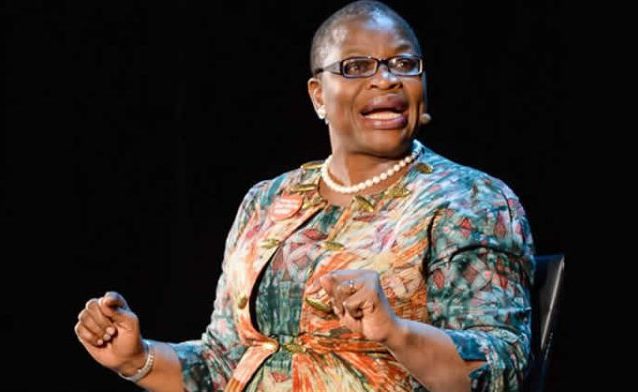
Former Minister of Education, Dr. Oby Ezekwesili, has for the first time explained how she developed deep hatred for pain and suffering, and why she has zero tolerance for oppressive conditions that subject people to such agony.
She traced this to the horror of the Nigerian Civil War of 1967—1970 as it impacted her and her family, saying that the war fast-tracked her maturity as it forced her to take up the responsibility of a forty-year-old at age 4.
Dr Ezekwesili made this revelation in Abuja during the National Thanksgiving Worship Service held at The Father’s Church on Saturday, May 2, 2026. The event had renowned American prophet and author, Cindy Jacobs, as guest speaker. Her message centred around the need for national repentance, especially following incidents of violence that have led to the shedding of innocent blood in the country at various times.
According to Ezekwesili, as the war spread to Port Harcourt, her family fled from the Rivers State capital. After what turned out to be a tortuous journey, they arrived in their home town in Anambra State, where she practically became the mother of her 2-year-old younger sister who had become so malnourished that they feared she could die, as did many children in the region.
According to the former World Bank Vice President for Africa, in other to keep her sister warm because of her condition, she would carry her and stay beside a fire. On a fateful day, she slept off beside her sister and only woke up to discover that her dress had caught fire, which left part of her thigh burnt.
“I carry the mark of the war on my thigh,” she said, adding “It is the reason why I cannot stand suffering by anybody, especially children.”
According to her, this was reinforced by her father who told his children after the war that the effect of the conflict on them was so horrific “that in our lives, we must do everything to not allow people suffer like we did.”
Ezekwesili got emotional when she recalled her involvement in the #Bringbackourgirls campaign following the kidnap of at least 276 schoolgirls from a school in Chibok, Borno State, in April 2014, and the effort made by young people who launched a search in the bush for the kidnapped children with den guns.
“It took me back to my childhood. It did, so I was so unhappy about what was going to happen to children again, this time as an adult,” she said.
She also recalled the trauma she experienced following one of the recent attacks in a part of the North when she saw a woman clutching her dead child.
“If the land that we live in is not making you cry, then all is not well, even with you,” she emphasized, underscoring the negative effect of blood shed in a land.