


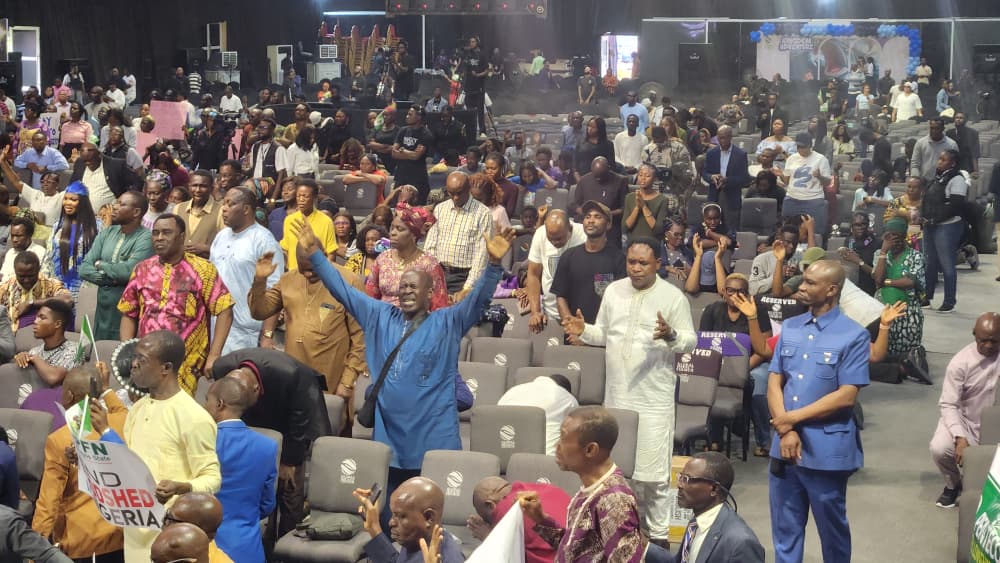
There is, perhaps, no nation on earth where religion has grown so spectacularly and national development has stagnated so tragically as Nigeria.
For over 40 years, Pentecostal Christianity has dominated the spiritual landscape of Nigeria. Thousands of churches have emerged. Tens of thousands of pastors have risen. Millions gather weekly in worship centres. Church auditoriums have become cities. Christian television, radio, conferences and crusades have multiplied beyond measure.
Yet the question that history stubbornly asks remains: Why has 40 years of Pentecostal revival produced so little national transformation? Why is a nation saturated with prayer still drowning in corruption?
Why do people speak in tongues on Sunday and steal public funds on Monday? Why do we have more churches than factories, more prophets than scientists, more vigils than productive institutions? Why has the church grown while the nation has decayed? These questions must be asked and answered.
Confusing Christianity With The Kingdom
The greatest failure of Nigerian Pentecostalism is not moral failure. It is theological failure. The gospel of the Kingdom was replaced by the gospel of personal breakthrough.
Jesus came announcing a Kingdom; we came announcing miracles. Jesus preached societal transformation; we preached individual prosperity. Jesus trained nation builders; we produced church attenders. Jesus raised disciples; we manufactured consumers of religion.
The result is predictable. A people can fill churches and still destroy a nation if they have never been taught Kingdom responsibility.
The Kingdom of God is not merely preparation for heaven. It is God’s government invading human affairs. It is God’s values shaping culture. It is God’s wisdom transforming systems. It is God’s righteousness influencing institutions.
But Nigerian Christianity largely reduced salvation to an escape plan from earthly responsibility. Consequently, believers learned how to pray but not how to govern; how to sow seeds but not build industries. How to cast out demons but not eliminate corruption. How to expect miracles but not create systems.
And nations are not transformed by miracles alone. Nations are transformed by ideas, values, institutions and competent leadership.
We Produced Church Builders Instead Of Nation Builders
The average Pentecostal church measures success by attendance; the Kingdom measures success by influence. Churches compete over membership; the Kingdom competes against darkness. Churches celebrate auditorium size; the Kingdom celebrates societal impact.
A nation cannot become prosperous merely because churches are full. A nation becomes prosperous when righteous men influence education, economics, politics, science, technology and governance.
For 40 years, the church has largely concentrated its brightest minds inside church structures. Instead of conquering society, we concentrated on expanding religious empires. Instead of discipling nations, we discipled congregations. Instead of transforming systems, we perfected ceremonies.
The consequence is obvious – the church became stronger and the nation became weaker.
Prosperity Gospel Created Consumers Instead Of Producers
Much of Nigerian Pentecostalism taught wealth acquisition without wealth creation. People were taught how to receive; very few were taught how to produce.
People learned financial confession but did not learn economic productivity. People learned supernatural increase but did not learn industrial development. People learned to pray for employment but were rarely taught how to create employment.
No nation has ever become prosperous through offerings. Nations become prosperous through productivity. Japan did not pray its way into industrialization. Singapore did not fast its way into economic excellence. South Korea did not anoint itself into technological advancement.
These nations built systems, developed institutions, invested in education, rewarded competence, and created cultures of excellence. The uncomfortable truth is that God blesses work, not laziness disguised as spirituality.
Pentecostalism Failed To Confront Corruption Adequately
Perhaps, the greatest indictment against Nigerian Christianity is the persistence of corruption among a highly religious population. The same people who occupy church front rows often participate in corrupt systems.
The same society that hosts the largest prayer meetings hosts some of the world’s most destructive corruption networks. This contradiction exposes a devastating reality.
Religion has modified behaviour; it has not transformed character. Many learned church language, few developed Kingdom values. Many became religious, few became righteous. Righteousness is not church attendance; it is integrity in private and public life.
Righteousness is refusing bribery. Righteousness is protecting public resources. Righteousness is serving the common good. When righteousness disappears from public institutions, no quantity of religious activity can save a nation.
The Church Abandoned The Seven Mountains
The early church transformed civilization because it influenced society. It shaped government. It shaped education. It shaped commerce. It shaped law. It shaped culture. It shaped families. It shaped ideas.
Modern Nigerian Pentecostalism often withdrew from these arenas while simultaneously complaining about their corruption. Nature abhors a vacuum. Whenever righteous people abandon institutions, unrighteous people occupy them.
For decades, many believers considered politics dirty. As decent people stayed away, predators took control. The tragedy is not that wicked men entered politics; the tragedy is that righteous men refused to enter.
Prayers Cannot Replace Responsibility
One of the most misunderstood truths in Nigerian Christianity is the relationship between prayer and responsibility. Prayer is powerful. But prayer is not a substitute for action. God will not do what He has delegated to men. A farmer who prays without planting remains hungry. A nation that fasts without reform remains poor.
A government that prays without competence remains ineffective. The Kingdom principle is simple: pray as though everything depends on God, and work as though everything depends on you. Nigeria mastered the first part. It neglected the second.
What 40 Years Should Have Produced
After 40 years of genuine Kingdom discipleship, Nigeria should have produced thousands of ethical politicians, industrialists, inventors, transformational educators, policy thinkers, reformers, and institution builders.
The evidence of Christianity is not church growth alone. The evidence of Christianity is societal transformation. If salt remains in the saltshaker, meat still rots. If light remains inside the church, darkness still dominates society.
From Pentecostalism To Kingdom Civilization
Nigeria does not need less Christianity; Nigeria needs deeper Christianity. Nigeria does not need less prayer; Nigeria needs prayer connected to responsibility. Nigeria does not need bigger churches; Nigeria needs bigger vision. Nigeria does not need more religious excitement; Nigeria needs more Kingdom discipleship.
The next move of God in Nigeria will not merely produce larger congregations, it will produce nation builders. It will produce reformers, ethical politicians, industrial architects, and educational revolutionaries.
It will produce men and women who understand that worship is incomplete until society changes. The future belongs not to Christians who merely attend church. The future belongs to Kingdom citizens who transform nations.
History will not ask how many conferences we attended. History will not ask how big our Church auditoriums were. History will ask what kind of nation we built. And before God Himself, the ultimate question may not be how loudly we prayed, but how faithfully we represented His Kingdom in the earth.
For a Kingdom that cannot transform a nation has not yet been fully understood. Christianity that does not transform a nation is liability. And a church that changes lives but not society has only completed half of its assignment.